Introduction and importance of real estate skills
Real estate is a constantly evolving field, and to succeed in it, you need not only technical knowledge, but also a number of important skills. Every day, new techniques, market trends, and consumer needs emerge in this field, and it is important for a professional to understand which skills can lead him to success.
This is where the concept of real estate skills reviews comes into play. These reviews not only give you a chance to test your current skills but also tell you which skills are most effective in the market. When you read different real estate skills reviews, you can understand which agents or professionals are experts in which skills and what kind of training or experience can improve their performance.
Important skills in real estate
Real estate professionals must be proficient in a variety of skills, including:
- Market analysis skills – knowing which properties are most profitable and what market trends are.
- Client relationship skills – A successful agent is one who can build strong and positive relationships with their clients.
- Legal and Financial Knowledge – It is essential to have a sound knowledge of the legal aspects and financial aspects while buying and selling property.
- Negotiation and Sales Skills – Persuasion skills are essential to make any deal successful.
Understanding of Technology and Social Media – Digital marketing and presence on online platforms is very important in today’s era.
The importance of real estate skills reviews
When we look at real estate skills reviews, they tell us which skills are useful in the real world and which skills have room for improvement. For example, if an agent has strong communication skills but is weak in market analysis, real estate skills reviews make it clear in which areas they need training.
Such reviews are not only useful for new agents but also provide guidance for experienced professionals on which skills to focus on to strengthen their position in the market.
Types of skills in real estate and their description
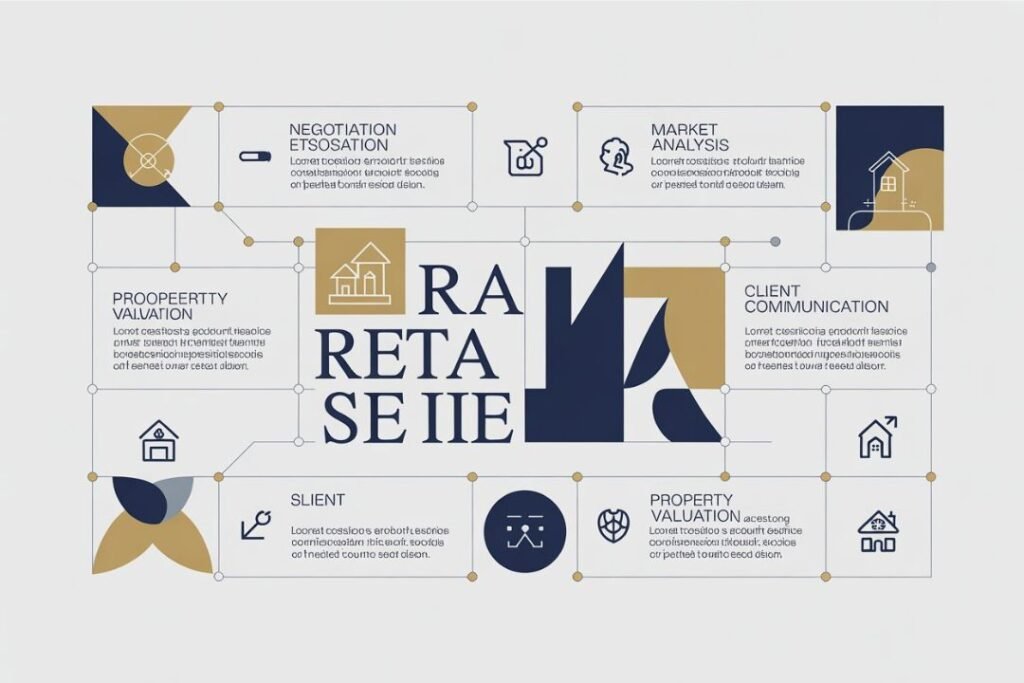
The real estate industry — whether you’re an agent, broker, or investor — isn’t just about knowing how to buy or sell property. It requires a combination of different skills to be successful. Below is a look at the key skills that are often prioritized in real estate skills reviews.
Comprehensive Market Knowledge / Local Market Expertise
- It is essential for an effective real estate professional to be fully aware of property prices in their area (or the market they are working in), resulting characteristics, neighborhood values, and future trends.
- Knowing the market situation allows an agent to provide real and current information to their clients — for example, which properties seem affordable now, which neighborhoods are best for families or investments, or which locations are most likely to appreciate in value in the future.
- In real estate skills reviews, individuals or agencies that are considered “market-savvy” are generally seen as more credible and trustworthy in the eyes of clients.
Effective communication and interpersonal skills
- In a real estate transaction, there are buyers, sellers, lenders, lawyers, and other parties involved. Clear, simple, and effective communication (spoken or written) is crucial.
- Just talking isn’t enough — active listening is also essential so that you can understand the client’s needs, concerns, and preferences and advise accordingly.
- Building good relationships and trust not only makes a deal easier, but also leads to future referrals and client loyalty.
Real estate skills reviews: Why are these skills given special attention?
The real estate market is very high-risk/high-reward — prices, market trends, loan rates, consumer preferences can all change. So fundamental knowledge alone is not enough, but a combination of skills and personality (professional conduct) is needed, which real estate skills reviews demonstrate on the Internet or in the market.
Agents or professionals who master market knowledge + communication + negotiation + marketing + ethics are generally more successful, reliable, and long-lasting.
Real estate skills reviews help new agents identify their weaknesses — which skills need to be improved, and those who have been working for a long time can update their skills to stay relevant to market changes.
Advantages and disadvantages — in question and answer form
What are the benefits of working in real estate?
- Flexible Schedule: You can set your own hours — meaning there are no set office hours, and you can work day or night, morning or evening, to suit your clients and personal life.
- Unlimited / High Earning Potential: Since payment is usually based on commission, there is no limit to your income if you work hard, have skills, and have a good knowledge of the market — meaning your earnings depend on your success.
- Independence & Entrepreneurial Opportunity: By becoming a real estate agent/broker, you can run your own business — you decide your own strategy, your own clients, your own time, and your own marketing.
- Variety & Dynamic Work: Not every day is the same — sometimes you have to show a property, sometimes you have to meet with a client, sometimes you have to negotiate, sometimes you have to do documentation or market research. This way, the work doesn’t get boring.
- Helping People & Job Satisfaction: There is satisfaction and joy when you help a client find their dream home or investment property — this profession also offers the opportunity to make a positive impact on people’s lives.
What are the disadvantages or difficulties of working in real estate?
- Inconsistent / Commission-Based Income: Since income only occurs when a deal is completed — if there is no deal, there is no money. This can lead to financial instability for new or experienced agents.
- Irregular / Long Working Hours: You may often have to work evenings, weekends, or to accommodate clients, which affects personal life and family time.
- High Competition: There are many agents in real estate, so it’s not easy to stand out, get clients, and establish a position in the market — both old and new agents face competition.
- Startup Costs & Self-Motivation: Licensing, marketing, listing, advertising, follow-ups, etc. all require time and money. New agents also have to work harder at first to establish their business.
- Market Dependence & Uncertainty: When the market slows down, or economic conditions worsen — demand for properties may decrease, and this can affect both your income and your work.
Frequently Asked Questions (FAQs)
What is the biggest benefit of becoming a real estate agent?
- The biggest advantage of being a real estate agent is that you set your own schedule, meaning you are not bound by any set office hours.
- There is no income ceiling in this profession — your earnings can be as high as you want, based on your hard work, market understanding, and expertise.
What is the income of this profession and what risks may be faced?
- : Real estate agent income is commission-based, meaning you don’t get paid until you close a deal to sell or buy a property.
- As a result, maintaining financial stability when there are no deals to sell or buy can be difficult, especially for new agents.
Does real estate work affect personal life?
- Yes — Since agents often have to work evenings, weekends, or holidays to accommodate clients, it can be difficult to maintain a work-life balance.
- Sometimes there are meetings with clients, property showings, negotiations, or document preparation, which differ from traditional work hours.
What qualities or hard work are required to succeed in the real estate sector?
- Self-discipline, time management, good networking, strong communication skills, and market understanding are essential for success in real estate.
- Also, consistent hard work and patience are important, as sometimes deals come late or the market slows down.
What could be the loss if the market crashes?
- A real estate agent’s income is directly dependent on market conditions and deals.
- If the number of properties being bought and sold decreases, or there are fewer buyers/sellers, the opportunity to earn commissions also decreases. This can affect financial stability, and a new agent may worry about survival.
(Conclusion)
Real estate agency is an attractive profession where you get flexible hours, high earning potential, and autonomy — especially if you work hard, consistently, and have good skills (such as communication, market understanding, networking).But it also comes with challenges such as uncertain income, dependence on weather or market fluctuations, long or irregular working hours, and intense competition.
Success in this profession is more likely for those who are passionate, hardworking, and patient, and strive to constantly learn and improve themselves.