(Introduction)
There are many professions in the healthcare sector that play a very quiet but very important role in the background. One of these important professions is the phlebotomist. A phlebotomist is a specialist who collects blood samples from patients.This task may seem simple, but in reality it requires a high level of expertise, patience, gentleness, and technical skill — which we collectively call phlebotomist skills.
The role of phlebotomists is fundamental in medical laboratories, hospitals, blood banks, and research institutions around the world. An accurate blood sample is the backbone for an accurate diagnosis.If the sample is improperly collected, contaminated, or does not meet test standards, the patient’s prognosis may be compromised. This is why phlebotomists must have confidence, accuracy, and skill.
What is a Phlebotomist?
A phlebotomist is a trained medical professional who collects blood samples for various tests and diagnoses. This blood can be taken:
- from a vein
- from capillaries
or from the fingertip, heel, or earlobe (especially in newborns).
A good phlebotomist is not just someone who inserts needles, but also:
- Keeps the patient calm
- Explains the procedure
- Uses the correct equipment
- Preserves the sample
- And then ships it with proper labeling
All of this is not possible without specific phlebotomist skills.
Why are Phlebotomist Skills Important?
Phlebotomy is not just about inserting the needle. The real importance lies in the skills behind the process. If skills are weak:
- The patient may suffer
- The vein may burst
- The sample may be spoiled
- The test report may be incorrect
- The hospital may face legal liabilities
But if the phlebotomist skills are strong, then:
- The patient feels confident
- The procedure is completed easily
- The sample is collected according to the best standards
- The laboratory gets accurate results
- The burden on the medical team is reduced
That is why phlebotomist skills are considered a fundamental pillar during training in this field around the world.
Basic Types of Phlebotomist Skills
An excellent phlebotomist is one who has a combination of technical, interpersonal, organizational, and ethical skills.
Below we will read a description of all these skills:
Technical Phlebotomy Skills
Venipuncture skills
This is the most important of the phlebotomist skills.
- These include:
- The ability to identify a vein
- Clean the skin
- Correct the angle of the needle
- Collect the desired amount of blood
- Safely remove the needle
- Stop the flow of blood
An experienced phlebotomist identifies veins not by guesswork, but by regular observation and touch.
Capillary Drawing Skills
Some tests require blood to be drawn from a finger or heel, especially:
- In children
- Blood sugar tests
- In rapid tests
This is also one of the important phlebotomist skills.
Equipment used
- Equipment used in phlebotomy includes:
- Needles of various gauges
- Tourniquets
- Vacuum tubes
- Cotton swabs
- Alcohol pads
- Sharp instruments disposal box
A skilled phlebotomist uses each instrument carefully and disposes of it according to proper protocol.
Protection from viruses and bacteria
Phlebotomists should be familiar with:
- wearing gloves
- using a mask
- washing hands
- disposal rules
- and preserving specimens
- all of which are essential.
This is the safest aspect of phlebotomist skills.
The Importance of Training in Phlebotomist Skills
Becoming a phlebotomist requires more than just holding a needle; it also requires regular training. Health organizations around the world have very strict standards for phlebotomy training because it is a profession in which even the slightest mistake can pose a risk to the patient’s health. That is why phlebotomist skills training is divided into several parts:
Theoretical Training
The foundation of any phlebotomist is theoretical knowledge. During training, the following is taught:
- General circulation of blood in the human body
- Identification of different veins
- Structure of skin, arteries and capillaries
- Blood types
- Body reactions during blood drawing
- Sizes, types and uses of needles
- Safety protocols
- Infection control
- Possible complications after blood drawing
This theoretical knowledge provides a strong foundation for phlebotomist skills.
Hands-On Practical Training
After the theoretical knowledge, the real test is practical training. Trained instructors put students through hands-on experience on a variety of patients. During this time, they learn how to:
Find a vein
- Insert the needle at the correct angle
- Control blood flow
- Fill the tube to the correct volume
- Use different colored tubes
- Collect blood cultures
- Handle critically ill or weak patients
- As the steps are carried out practically.
These are fundamental to all phlebotomist skills.
Practice with modern equipment

Many hospitals today use modern equipment, such as:
- Vacuum systems
- Butterfly needles
- Digital labeling systems
- Auto-disposal containers
- Mobile phlebotomy kits
A skilled phlebotomist is familiar with modern equipment. It is these phlebotomist skills that take him from traditional practices to modern standards.
Ethical behavior with the patient (Ethical Phlebotomist Skills)
A phlebotomist needs not only technical skills but also ethical skills. A wrong sentence, harsh tone or hasty action can increase the patient’s fear. Ethical principles are the heart of this profession.
Below are some important ethical phlebotomist skills:
Respect for patient privacy
The phlebotomist is not allowed to disclose:
- Patient’s name
- Disease
- Personal information
- Test details
- To any unrelated person.
This is an important part of HIPAA and other guidelines.
Obtaining prior permission from the patient
It is important to obtain permission from the patient before each phlebotomy.
This is a basic ethical phlebotomist skill.
- The phlebotomist should say:
- “I am about to take a blood sample from you, are you ready?”
- This phrase builds the patient’s confidence.
The patient’s perception of pain and fear
Many patients are scared of needles. A good phlebotomist:
- Speaks in a soft voice
- Reassures the patient
- Uses distractions
- Even has the patient lie down if necessary
These phlebotomist skills make the entire experience easier for the patient.
Impartial and professional attitude
A phlebotomist must treat everyone equally, whether they are:
- a child
- an old person
- a rich person
- a poor person
- a seriously ill person
- or a person under psychological stress
There is no room for discrimination in this profession.
Daily Challenges and Phlebotomist Skills in Hospitals
Every day is a new day for a phlebotomist. Sometimes patients are calm, sometimes they are nervous. Sometimes the vein is easy, sometimes it is hidden. That is why this profession requires mental toughness along with practical skills.
Below are common challenges and important phlebotomist skills to overcome them:
Facing hidden or difficult veins
Many patients have unclear veins:
- Obese patients
- Very weak patients
- Dehydrated individuals
- Elderly patients
- Small children
- These are cases where the phlebotomist’s skills are truly tested.
Solution:
- Warm the arm with lukewarm water
- Tie the tourniquet a little tight
- Hang the patient’s arm down
- Trace the veins with your fingers
- Use a butterfly needle
Risk of fainting (Fainting Patients)
- Some patients may faint immediately after the needle is inserted.
- What should the phlebotomist do?
- Monitor the patient’s symptoms
- If the patient feels dizzy, have them lie down immediately
- Note facial color, sweating, and restlessness
- Let them sit for a few minutes after drawing blood
- These phlebotomist skills prevent risks.
Working in a noisy, crowded, and stressful environment
- The hospital environment is often:
- Busy
- Stressful
- Noisy
- A phlebotomist must remain calm and work in this environment.
Skills Required:
- Time Management
- Ability to Maintain Focus
- Decision Making Under Pressure
- Teamwork
Difficult or angry patients
Many patients:
- Are angry
- Are anxious
- Are in pain or have a drip
- Can’t stand noise
- A good phlebotomist can improve their behavior with gentle conversation.
Phlebotomist Skills and Patient Confidence
Patient trust is the soul of the profession.
If the patient trusts the phlebotomist, he/she will:
- not be afraid
- will keep his/her hand relaxed
- his/her blood pressure will remain stable
- the test will be completed easily
- Phlebotomist skills to build trust include:
- being polite
- acting confidently
- providing accurate information
- not making false claims
- staying calm
Phlebotomist Skills and Taking Blood from Children
Taking blood from children is one of the most sensitive tasks.
Here the skill, ethics, patience and gentle attitude of the phlebotomist all work together.
- Principles of Phlebotomy with Children:
- First comfort the parents
- Talk according to the child’s age
- Distract him with a toy, cartoon or candy
- Work quickly and skillfully
- Give the child’s hand firm support
- Keep pain to a minimum
These phlebotomist skills come only after specialized training.
Phlebotomist Skills – Detailed FAQs (Frequently Asked Questions)
What is a phlebotomist?
A phlebotomist is a trained medical professional who safely collects blood samples from patients. They have special skills called phlebotomist skills, such as finding a vein, inserting the needle correctly, labeling the sample, and transporting it to the laboratory without contamination.
What is the most important skill in Phlebotomist Skills?
The most basic and important skill is Venipuncture, which is the process of drawing blood by inserting a needle into a vein. Without this skill, the work of a phlebotomist is not possible. In addition, correct labeling, gentle conversation with the patient, following safety rules, and working comfortably are also part of phlebotomist skills.
How does a good phlebotomist recognize a vein?
The phlebotomist uses touch, experience, observation, and the direction of light to identify the vein. If the vein is not obvious, he or she:
- Warms the arm
- Keeps the patient’s hand down
- Applies the tourniquet in the correct position
- These are all included in the phlebotomist skills.
Does phlebotomy hurt?
A slight sting is definitely felt, but if the phlebotomist has excellent phlebotomist skills, the patient will experience very little pain. Experienced phlebotomists keep the angle of the needle correct, which minimizes discomfort.
Is the role of the phlebotomist growing in the future?
As the number of tests increases, laboratory services become more advanced, and home services become more common, the demand for individuals with phlebotomist skills is increasing.
Why can phlebotomist mistakes be dangerous?
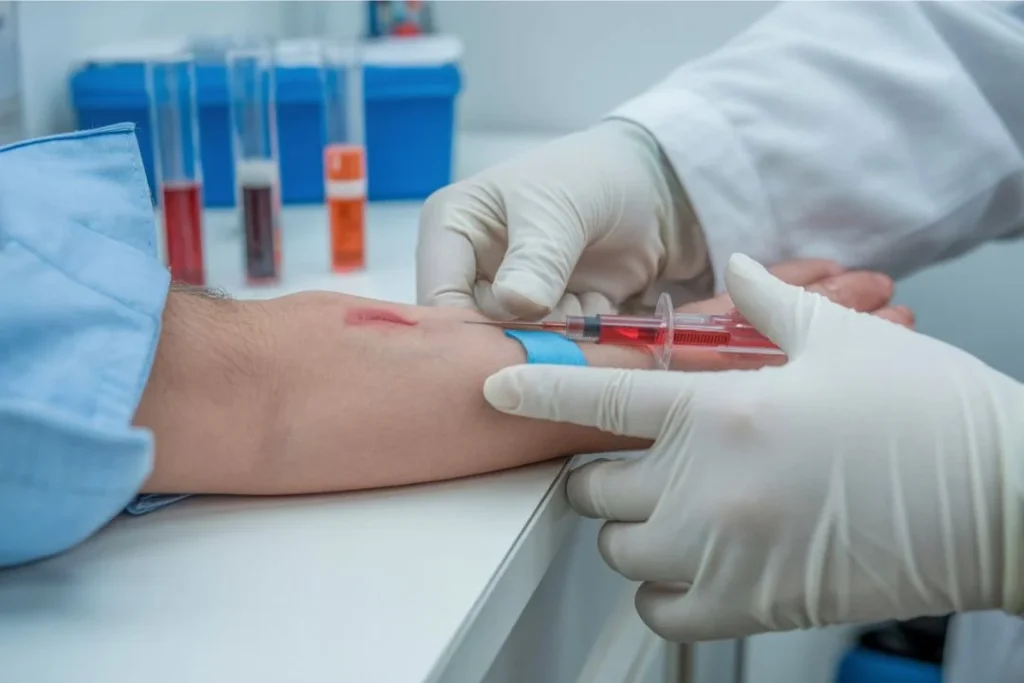
Because the blood collected by the phlebotomist is the only blood tested in the laboratory, if:
- the sample is contaminated
- too little or too much blood is taken
- the wrong tube is used
- the wrong label
- the report may be incorrect.
(Conclusion)
Phlebotomy is a profession that requires not only technical skills but also patience, forbearance, ethics, and responsibility. A person with excellent phlebotomist skills reduces the patient’s fear and provides them with a safe and comfortable experience. From finding the right van to safely transporting the sample to the laboratory, every step requires skill and confidence.
In short, a phlebotomist is someone in whose hands the foundation of a patient’s health is placed, and his strong phlebotomist skills are what make him a capable and successful professional.