Introduction and basic concepts
Cognitive Computing is an advanced technological concept that has created a new world by combining human intelligence and computer power. In today’s digital era, where the amount of data is increasing every moment, Cognitive Computing has not only helped humans solve complex problems but has also changed the way they make decisions, learn, and analyze.
What is Cognitive Computing?
Cognitive computing is a computer system that has the ability to think, understand, and learn in the same way as the human brain. This system does not simply follow programmed instructions, but rather learns from its experience in new situations and finds solutions to problems.
Cognitive Computing mainly involves three things:
- Perception: The system acquires data from the environment, such as images, sound, or text.
- Analysis: Understanding patterns, trends, and relationships based on the acquired data.
- Decision Making: Developing an appropriate decision or response after analyzing the information.
These three steps mimic the human brain’s ability to think, and that’s why it’s called cognitive computing.
Human Mind and Cognitive Computing
The human brain is a complex machine that processes millions of pieces of information every moment. The brain not only collects information but also establishes relationships between them, learns from past experiences, and makes decisions for the future.
Cognitive Computing is also based on the same principle:
- Learning: The system learns from new data.
- Analyzing: Finds patterns and connections in information.
- Decision-Making: Makes decisions based on learned knowledge.
These systems improve over time, just as the human brain becomes more skilled through experience.
Fundamentals of Cognitive Computing
The basic principles of Cognitive Computing are as follows:
- Self-Learning: The system continuously learns from new data.
- Contextual Understanding: It does not just read data, but also understands its background and context.
- Natural Language Processing (NLP): The ability to understand and respond to human language.
- Pattern Recognition: Identifying patterns and relationships that are not obvious to humans.
- Human-Computer Interaction: Better and more effective communication with the human user.
Based on these principles, Cognitive Computing becomes a smart system that emulates the human brain, solving complex problems in a simple way.
Machine Learning and Cognitive Computing
Cognitive Computing is related to machine learning and artificial intelligence (AI). Machine learning is the process in which computers learn on their own through algorithms, while AI gives systems the ability to think like human intelligence.
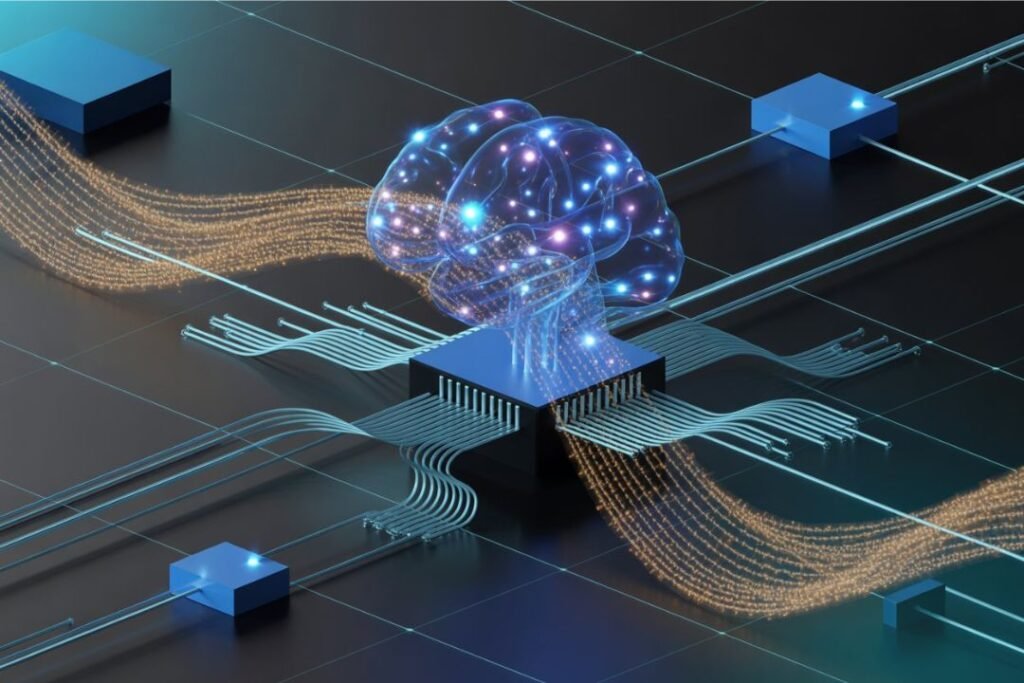
- Cognitive Computing and AI: Cognitive Computing is a subset of AI, which specifically focuses on learning, understanding, and human-like decision-making.
- Cognitive Computing and Machine Learning: This system is able to recognize patterns in data and produce better results.
- For example: IBM Watson is a Cognitive Computing system that not only processes information but also answers questions in a human-like manner.
Characteristics of Cognitive Computing
Some of the salient features of Cognitive Computing are as follows:
- Dynamic Learning: The system learns and improves from each new data.
- Context Awareness: Understands each information according to the context.
- Reasoning Ability: Has the ability to make decisions after analyzing the information.
- Adaptive Systems: The system adjusts itself according to the situation.
- Natural Interaction: Responds according to human language and behavior.
These features make Cognitive Computing completely different and more powerful than traditional computer systems.
Conclusion: The importance of Cognitive Computing
In today’s world, the amount of data is growing rapidly and complex problems are everywhere. Cognitive Computing has transformed many aspects of human life, such as:
- Better decision-making in business
- Accurate diagnosis in the healthcare sector
- New ways of learning in education
- Automated and intelligent systems in everyday life
Cognitive Computing has emerged as a key technology in enhancing human capabilities and solving complex problems.
Historical evolution
Cognitive Computing is a modern technology, but its roots are deep in the history of human intelligence and computers. To understand its evolution, we need to look back at the early development of the machine, the beginnings of artificial intelligence (AI), and notable cognitive computing projects.
Introduction to Cognitive Computing
The concept of cognitive computing actually began with the idea of building computer systems modeled after the human brain. In the 1950s, when computers were just calculating machines, researchers began to wonder if computers could think like the human mind.
Alan Turing: In 1950, Turing proposed a concept that questioned the potential for computer intelligence. The Turing test is still considered the foundation of AI and Cognitive Computing today.
Early computers simply processed data, but the goal of Cognitive Computing was to understand data and aid in decision-making.
Artificial Intelligence and Cognitive Computing
In the 1960s and 1970s, Artificial Intelligence paved the way for Cognitive Computing.
- The Beginnings of AI: Early AI systems worked on basic rules and algorithms, like chess-playing programs.
- The Difference to Cognitive Computing: AI processed information, but Cognitive Computing has the ability to understand, learn, and make decisions in a human-like manner.
This distinction is important because Cognitive Computing does not simply act according to programming, but rather learns from experiences.
1980s and 1990s: Development and research work
In the 1980s and 1990s, the concepts of Cognitive Computing became clearer:
- Neural Networks: Computer models modeled after the human brain, which were capable of learning, were introduced.
- Expert Systems: Systems that acted like experts in specific fields, such as medical diagnosis or financial advice.
- Machine Learning Foundations: Algorithms were developed that could learn from data on their own, and began to be used in Cognitive Computing.
This development helped to make Cognitive Computing a reality.
IBM Watson and Advanced Cognitive Computing
- Cognitive Computing has revolutionized the practical world since 2000. The most famous example is IBM Watson:
- IBM Watson: In 2011, Watson defeated the human champion on the American game show “Jeopardy!”
- Watson showed that Cognitive Computing can be adept at understanding language and answering complex questions, rather than just processing data.
- Watson then began working in fields like health, law, and education, where human decisions could be made better and faster.
Other important projects in Cognitive Computing
In addition to IBM Watson, there are several other Cognitive Computing projects:
- Google DeepMind: Human-like learning models, such as AlphaGo, that can beat the world’s best Go players.
- Microsoft Cognitive Services: Smart APIs that can understand image, voice, and written data.
- Amazon Alexa and Siri: Systems used in everyday life that understand and respond to human language.
All of these projects are practical demonstrations of turning the concept of Cognitive Computing into reality.
The Evolution of Cognitive Computing: Summary
The history of Cognitive Computing shows that it is not just a modern trend, but the result of decades of research and experimentation:
- 1950–1970: The beginnings and basic concepts of AI
- 1980–1990: Neural networks and Expert Systems
- Post-2000: IBM Watson, DeepMind, and modern Cognitive Services
This evolution proves that Cognitive Computing is constantly approaching human intelligence, and it is revolutionizing not only computer science but every aspect of human life.
Technical composition
The success of Cognitive Computing depends on its technical architecture and components. A Cognitive Computing system is not just composed of complex algorithms, but is made up of a combination of several technical components, hardware and software, that enable it to think, learn, and make decisions like the human brain.
Components of Cognitive Computing
The basic components of Cognitive Computing are as follows:
Data Collection:
- The first step for cognitive computing systems is to acquire data.
- This data comes from a variety of sources: images, sound, text, video, sensor data, etc.
- For example, a healthcare cognitive system collects patient medical records, imaging reports, and laboratory results.
Data Processing:
- The data obtained is processed to make it understandable and usable.
- Cognitive Computing systems use complex algorithms to recognize patterns and relationships hidden in data.
- This processing is similar to the basic analytical ability of the human brain.
Frequently Asked Questions (FAQs) about Cognitive Computing
What exactly is Cognitive Computing?
Cognitive Computing is the technology that enables computers to think and understand like the human brain. These machines don’t just collect information, but also analyze it and develop the ability to make decisions, just as humans think and act.
How is it different from a normal computer?
A normal computer only works according to a program. That is, if it is not taught something, it cannot make decisions on its own. Cognitive Computing computers have the ability to learn, understand, and respond according to situations, which is why they are called more “intelligent.”
How does it learn?
Cognitive Computing uses machine learning and neural networks to recognize patterns in data. For example, it learns from previous experiences or information to make better decisions next time, just as humans learn from past experience.
How does Cognitive Computing benefit us in our daily lives?
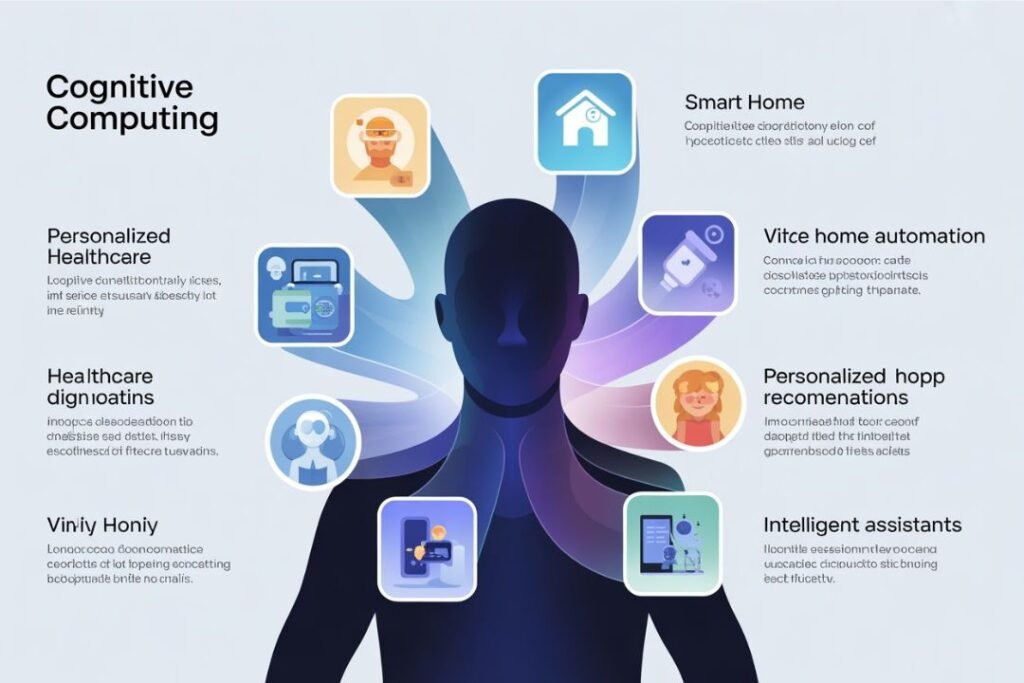
It makes complex tasks easier. For example:
- Giving a doctor a recommendation after looking at a patient’s history in a hospital
- Analyzing market trends in finance
- Making plans according to children’s learning styles in education
If a human does this task, it will take a long time, but Cognitive Computing provides fast and accurate answers.
Can it think like a human brain?
It cannot currently replicate the full human brain, but it can perform some aspects like learning, analysis, and decision-making in a human-like manner. It is limited for now, but will develop further in the future.
(Conclusion)
Cognitive Computing is an attempt to transfer human intelligence to machines. It has the ability to understand, learn, and solve complex problems, making human life and work easier and faster. In the future, this technology will play an important role in every field and make our decisions more effective and accurate.